For more than a century, auto insurance pricing operated on probability models that treated individual drivers as demographic composites. Underwriters relied on broad actuarial proxies—such as age, gender, credit history, marital status, and residential ZIP codes—to determine risk. If you were a careful, defensive driver living in an area statistically prone to property crime or frequent collisions, your premium reflected the neighborhood baseline rather than your personal caution behind the wheel.
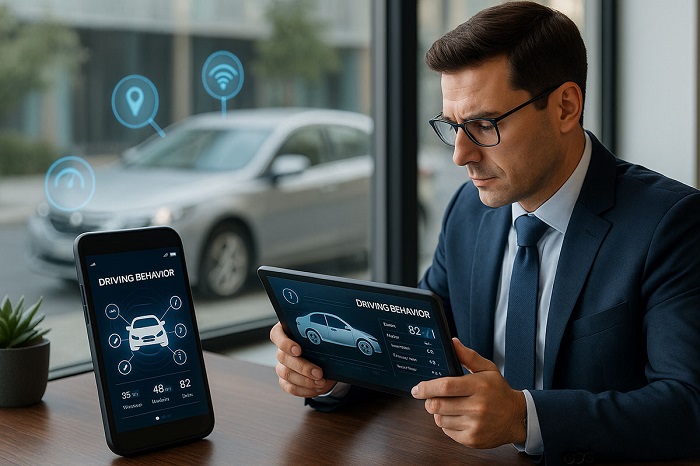
Usage-based insurance, commonly referred to as UBI, disrupts this dynamic by substituting generalized population data with real-time empirical measurement. Powered by telematics—the integration of telecommunications and vehicular informatics—insurers can now monitor driving behaviors with high precision. For millions of motorists, this technological shift offers the promise of meaningful policy discounts. For others, it introduces unexpected premium spikes, privacy trade-offs, and an unyielding surveillance model where every tap of the brake pedal is logged, analyzed, and monetized.
The Shift from Actuarial Proxies to Real-Time Telematics
The fundamental philosophy of traditional insurance is risk pooling: low-risk policyholders subsidize high-risk policyholders to preserve solvent reserves. However, demographic proxies have long generated friction among consumers who feel penalized for circumstances beyond their driving proficiency, such as carrying a lower credit score or working an evening shift.
Telematics shifts underwriting from static indicators to dynamic behavior. Programs typically divide into two models: pay-as-you-drive programs, which calibrate rates primarily around total annual mileage, and pay-how-you-drive programs, which evaluate driving habits in real time.
By measuring the physical reality of how a vehicle is operated, insurers can isolate their most profitable policyholders—those who rarely drive, avoid high-risk corridors, and operate their vehicles defensively—and incentivize them with customized pricing.
How Telematics Technology Collects Driving Data
Insurers deploy telematics through three primary delivery methods, each offering varying levels of diagnostic depth and user convenience.
First, dedicated plug-in OBD-II devices connect directly to the diagnostic port beneath the vehicle steering column. These hardware units communicate directly with the vehicle onboard computer, capturing clean data regarding vehicle speed, trip duration, engine status, and hard physical deceleration without relying on a third-party interface.
Second, mobile smartphone applications utilize the internal accelerometers, gyroscopes, and GPS chips embedded in modern smartphones to monitor trips automatically. While convenient and inexpensive for insurers to deploy, phone-based monitoring introduces measurement noise, such as misidentifying a passenger trip on public transit as active driving or misinterpreting a dropped phone as an aggressive vehicle swerve.
Third, embedded connected-car systems use factory-installed cellular modems built into contemporary vehicles by original equipment manufacturers. Automakers partner directly with insurance analytics networks, transmitting driving telemetry straight from the vehicle dashboard systems to underwriting databases without requiring the driver to plug in an adapter or open a third-party app.
The Core Metrics That Dictate Your Rate
Telematics algorithms digest raw trip telemetry into composite risk scores. While exact proprietary weighting varies across insurance carriers, several performance indicators carry disproportionate influence on your final premium calculation.
Braking and Acceleration Patterns
Smooth vehicle handling is the strongest statistical correlation with lower claim frequency. Algorithms log instances of sudden deceleration, commonly defined as drops in speed exceeding seven to ten miles per hour within a single second. Insurers classify hard braking events as evidence of tailgating, poor hazard anticipation, or distracted driving. Rapid acceleration events, while weighted somewhat more leniently, are tracked as indicators of aggressive driving behavior.
Late-Night Operating Windows
A mile driven at two in the morning carries statistically higher fatality and severe-collision rates than a mile driven on a quiet Tuesday afternoon. Telematics programs heavily penalize driving between midnight and four in the morning, when rates of alcohol-impaired drivers, driver fatigue, and poor road visibility peak. Even if you drive cautiously, regular travel during these overnight hours will drag down your telematics safety score.
Total Mileage and Trip Duration
Every minute a car spends on the road increases mathematical exposure to potential loss. Drivers who log fewer than 7,500 miles annually represent significantly lower liabilities than daily long-distance commuters who log 20,000 miles. Telematics tracks not only aggregate mileage but also whether trips occur during chaotic rush-hour windows characterized by stop-and-go congestion.
Smartphone Handling and Distraction
Mobile-based telematics applications detect when a driver unlocks, taps, or manipulates their phone while the vehicle is in motion. Given that distracted driving accounts for a growing share of modern property damage and bodily injury claims, detected screen interaction while driving triggers severe scoring deductions in contemporary UBI formulas.
The Financial Impact: Guaranteed Discounts Versus Potential Surcharges
When usage-based insurance programs debuted, carriers marketed them strictly as no-risk discount programs. Drivers enrolled with the assurance that exemplary performance would earn discounts ranging from 10% to 30%, while poor driving scores would simply return the policyholder to standard baseline rates.
That regulatory landscape has shifted. Today, many major carriers openly state in their policy agreements that sub-par driving scores, high mileage, or aggressive driving events can trigger rate surcharges. A policyholder who signs up expecting a discount could see their renewal premium surge by 10% to 25% if the data reveals frequent late-night driving, heavy phone interaction, or recurring hard braking events.
Additionally, telematics data eliminates the buffer between small behavioral patterns and financial consequences. Under traditional insurance, a clean driving record remains clean until a moving violation or an at-fault accident occurs. Under usage-based insurance, daily minor driving events are quantified and continuously applied to your premium calculations.
Context Blindness: The Algorithmic Flaws of Telematics
The central limitation of telematics lies in context blindness. Accelerometers and algorithmic models record physical forces, but they cannot assess road conditions, human intent, or defensive maneuvers.
If a distracted driver cuts across two lanes of traffic and you slam on your brakes to avoid a major collision, your defensive reaction successfully prevented an expensive claim. Yet the telematics device registers only a severe hard-braking event, registering a negative mark against your safety score.
Similarly, navigating rutted rural roads, dodging potholes in neglected urban streets, or driving safely through heavy ice and snow can generate lateral forces and sudden braking profiles that algorithms interpret as erratic operation. The system records the physics of the event without understanding the necessity behind the action.
Privacy and Secondary Data Distribution
Enrolling in telematics requires surrendering continuous location and behavioral data to an insurance entity. This ongoing stream of information reveals where you work, where you worship, what medical clinics you visit, where you shop, and when your residence is left vacant.
Beyond primary insurer surveillance, the broader risk lies in third-party data brokerage. In recent years, automotive manufacturers and telematics software aggregators have faced intense scrutiny for routing raw driving records, trip logs, and vehicle performance data to commercial risk-scoring platforms without explicit consumer understanding.
When your real-time driving profile becomes part of a permanent data dossier, it has the potential to influence underwriting determinations across multiple carriers, limiting your ability to shop around for competitive coverage without your past telematics data following you.
Who Benefits Most and Who Should Opt Out
Deciding whether to enroll in a telematics program requires an honest, objective audit of your daily driving reality rather than an optimistic estimate of your driving skill.
The Prime Candidates for Telematics
-
Remote workers and retirees who drive sparingly and can keep their annual vehicle usage well below national averages.
-
Cautious suburban drivers whose daily routines rarely involve dense urban traffic, aggressive freeway merges, or late-night travel.
-
Experienced drivers with non-standard demographic profiles, such as young drivers facing inflated age-based rates who can prove defensive habits and secure lower pricing through data.
Drivers Who Face Hidden Penalties
-
Healthcare workers, hospitality staff, and third-shift employees who regularly commute during late-night risk windows.
-
Urban commuters forced to navigate heavy stop-and-go traffic where sudden braking is an unavoidable daily reality.
-
Parents sharing vehicles with teenagers, as inexperienced driving habits will inevitably depress the shared telematics score and elevate the household policy premium.
Usage-based insurance offers undeniable economic benefits for drivers whose routines fit neatly inside the algorithmic profile of low risk. However, before trading behavioral data for the prospect of a lower premium, motorists must read the policy fine print, understand whether rate hikes are possible, and determine whether the monetary savings justify continuous vehicular monitoring.